HDPE wear strips for hard-working plant and conveyor lines
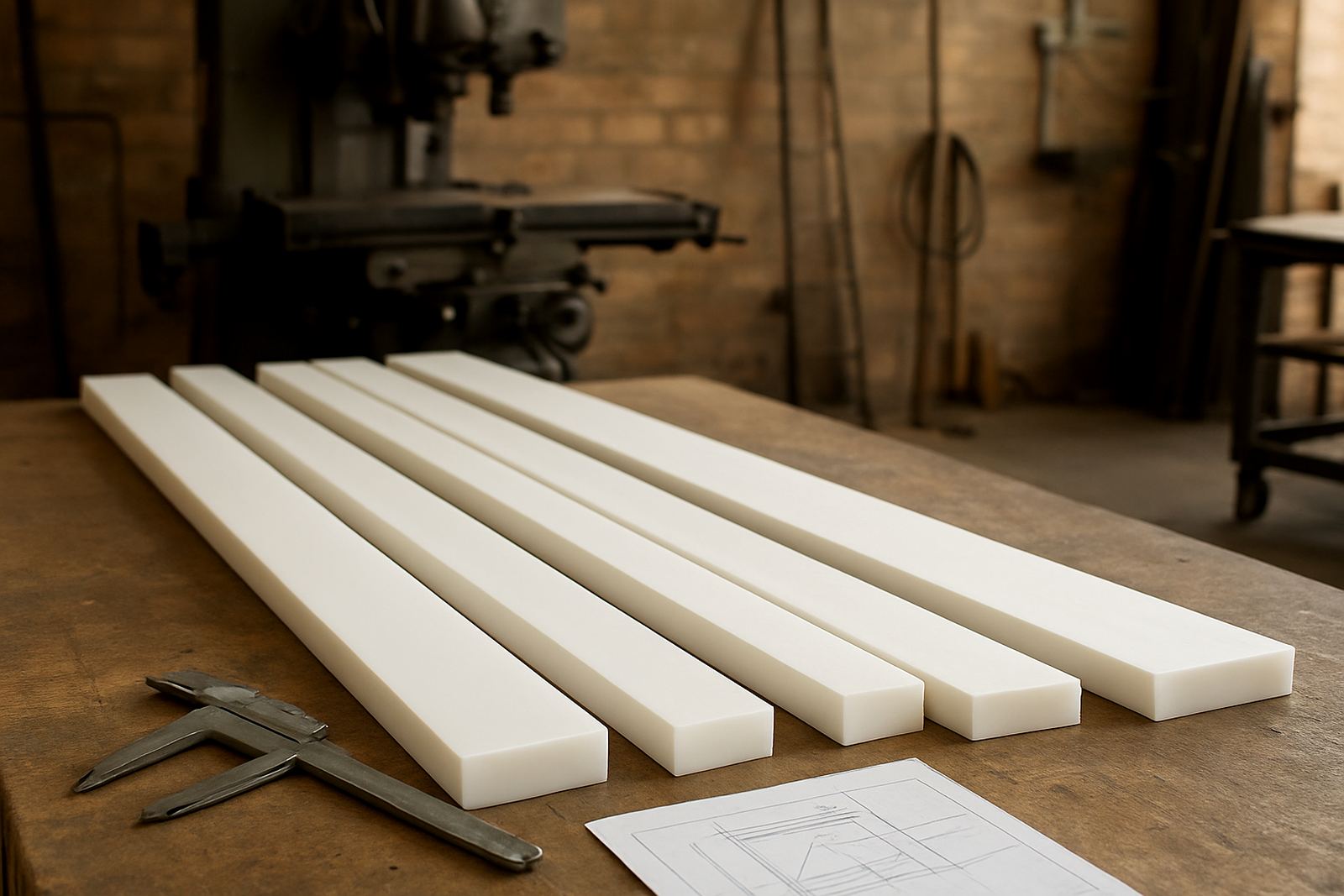
HDPE wear strips are machined strips used to reduce wear between moving parts and fixed surfaces. They are commonly fitted to conveyors, guide rails, chain tracks, slide beds and support points where metal-on-metal contact would shorten service life or make movement noisy and uneven.
At our Table View workshop, we cut and machine strips to suit the application rather than forcing a standard size onto the job. That matters on local sites where machinery may be older, modified over time, or built from mixed components. HDPE gives a low-friction bearing surface and handles repeated movement well, which makes it suitable for many light to medium industrial uses in workshops, packaging areas and processing lines.
It also performs well in coastal conditions where humidity and salt air can affect some materials. For Cape Town sites close to the harbour or exposed loading bays, HDPE is a sensible option when you need a part that stays stable and does not corrode.
Common sizes, thicknesses and machining options
We supply HDPE wear strips in cut lengths, shaped profiles and drilled components, depending on how the part will be fixed and how much contact it needs to take. Material selection and finish can be adjusted to suit moving speed, load and operating temperature. If your site has a specific gap or track width, we can machine to that dimension instead of trimming on site.
- Thicknesses typically from 6 mm to 50 mm
- Widths from 20 mm to 300 mm, with wider sections available on request
- Standard cut lengths or continuous runs for longer conveyor lines
- Drilled fixing holes, countersinks and slotting for easy fit-up
- Chamfered or radiused edges to reduce snagging and start-up wear
- Profiles for guide strips, chain wear strips and slide supports
For repeat orders, we can keep dimensions on file so replacement parts match the original piece. That helps maintenance teams avoid delays when a strip wears down and needs to be swapped quickly during planned shut down work.
Where HDPE wear strips suit best
These parts suit equipment that moves continuously or in short, repeated cycles. The material is often chosen where low friction, decent impact resistance and easy machining are more important than decorative finish. It is a good fit for many factory and workshop applications, especially when the part is not exposed to open flame or extreme heat.
Typical uses include conveyor guides, bottle and carton handling lines, sliding support rails, transfer points, gate guides and machine guards with moving contact surfaces. It can also work in packaging lines, food handling areas where suitable grades are specified, and on general industrial machinery that needs a replaceable wear surface.
In Durbanville, Montague Gardens and Paarden Eiland, we often see wear strips used where production lines have been adapted over time and the original fittings are no longer available. In those cases, a machined replacement is usually the quickest way to get the equipment running again without major changes to the frame or drive system.
- Conveyor systems and chain tracks
- Guide rails and sliding supports
- Transfer tables and feed sections
- Packaging and handling equipment
- Workshop jigs and machine interfaces
Installation on site and workshop fit-up
Wear strips can be supplied for client installation or fitted as part of a maintenance call, depending on the location and the access available. Some jobs are simple bolt-on replacements. Others need removal of old parts, cleaning of the mounting face and careful alignment so the moving section runs true and does not bind.
We work with businesses across Table View, Blouberg, Parklands and Milnerton, and we understand that many sites need work done around shift changes or after hours. If a line has to keep running, we can fabricate spares in advance so the swap-out is quick. For some installations, one person can fit the strip with basic hand tools. For longer runs or awkward sections, a two-person lift or mechanical support may be safer.
HDPE wear strips do not need power or gas for use once installed. However, fabrication in the workshop may involve CNC routing, drilling or finishing equipment. If the job includes fixing to a steel frame, we can prepare the strip to suit mechanical fastening, and in some cases the mounting member may need rework before fitment. A tidy fit saves trouble later, especially where vibration is present.
Care, service life and replacement planning
HDPE is a low-maintenance material, but it still needs routine checks. The main things to watch are surface wear, edge damage, loose fasteners and any build-up of dirt or product residue that may increase drag. On conveyor lines, uneven wear often points to misalignment, track contamination or a guide setting that needs adjustment, not just a worn strip.
Regular inspection helps extend service life. In dusty inland areas the wear pattern may be different from that found near the coast, where moisture and fine salt can sit on equipment. The strip itself will not rust, but surrounding fixings and frames can still need attention. A quick monthly check is often enough for smaller systems, while heavily used lines may need weekly visual inspection.
When a strip is near the end of its life, replace it before it breaks away or starts to cut into the mating surface. That is the point where a small job can turn into a bigger repair. We can machine replacements from the old sample if the original drawing is not available, which helps when a plant has been running for years with no proper records.
What to check before ordering your wear strips
Getting the measurements right first time saves time on site and keeps the conveyor or guide running properly. Before placing an order, check the full length, width and thickness of the existing strip and note how it is fixed. If the part is curved, angled or stepped, bring the old piece or clear photos with a tape measure in frame.
The following details help us quote and machine the correct part:
- Overall length, width and thickness in millimetres
- Hole pattern, slot positions and fixing method
- Whether the strip runs straight, curved or in sections
- Operating speed, load and contact type
- Any heat, moisture or chemical exposure on site
- Whether the part must be replaced as a one-off or in batches
If you are not sure about the material grade or profile, we can help you work through it from the worn sample. That is often the quickest route for maintenance teams who need a replacement in a hurry, especially when a production line is sitting idle and the old part is already broken or too worn to measure cleanly.
Why local machining makes a difference in Cape Town
Having the wear strip machined locally means shorter lead times, easier changes and better control over the finished part. Our workshop in Table View supports businesses in Cape Town, including industrial areas around Montague Gardens, Paarden Eiland and nearby suburbs where machine uptime matters. We can produce small runs, repeat parts and one-off replacements without unnecessary delays.
Because we also work on signage, engineering plastics and CNC parts, we understand practical fit, fixing and finish. That helps when a part must sit neatly in a larger assembly and not just look straight on the bench. If a strip needs a slight adjustment after trial fit, it can be sorted in the workshop rather than becoming a field problem.
For businesses that need a reliable replacement part and not a generic offcut, HDPE wear strips are a sound option. They are straightforward, cost-effective and easy to keep on hand for maintenance. In the long run, that can save a fair bit of down time, especially on older equipment that still does the job well.
Key facts
| Material | HDPE engineering plastic |
|---|---|
| Typical thickness | 6 mm to 50 mm |
| Typical width | 20 mm to 300 mm |
| Finish | Cut, drilled, routed or chamfered |
| Fixing options | Bolted, slotted or custom machined |
| Use case | Conveyors, guides, slides and moving equipment |
| Power or gas required | No for installation or operation |