Why workshop time is lost on small parts
Most fabrication delays do not come from the big items. They come from the small pieces that need measuring, trimming, and redoing because the first cut was a bit off. A flange cover that is 3 mm out, a sign face that does not sit square, or a plastic insert that binds under load can hold up a whole job.
In a busy workshop, every extra step adds pressure. The team has to stop the next task, reset the saw or router, and check the part again. Accurate cut to size supply removes that stop-start pattern and gives you parts that are ready to fit, not ready to be adjusted.
What cut to size means in day to day fabrication
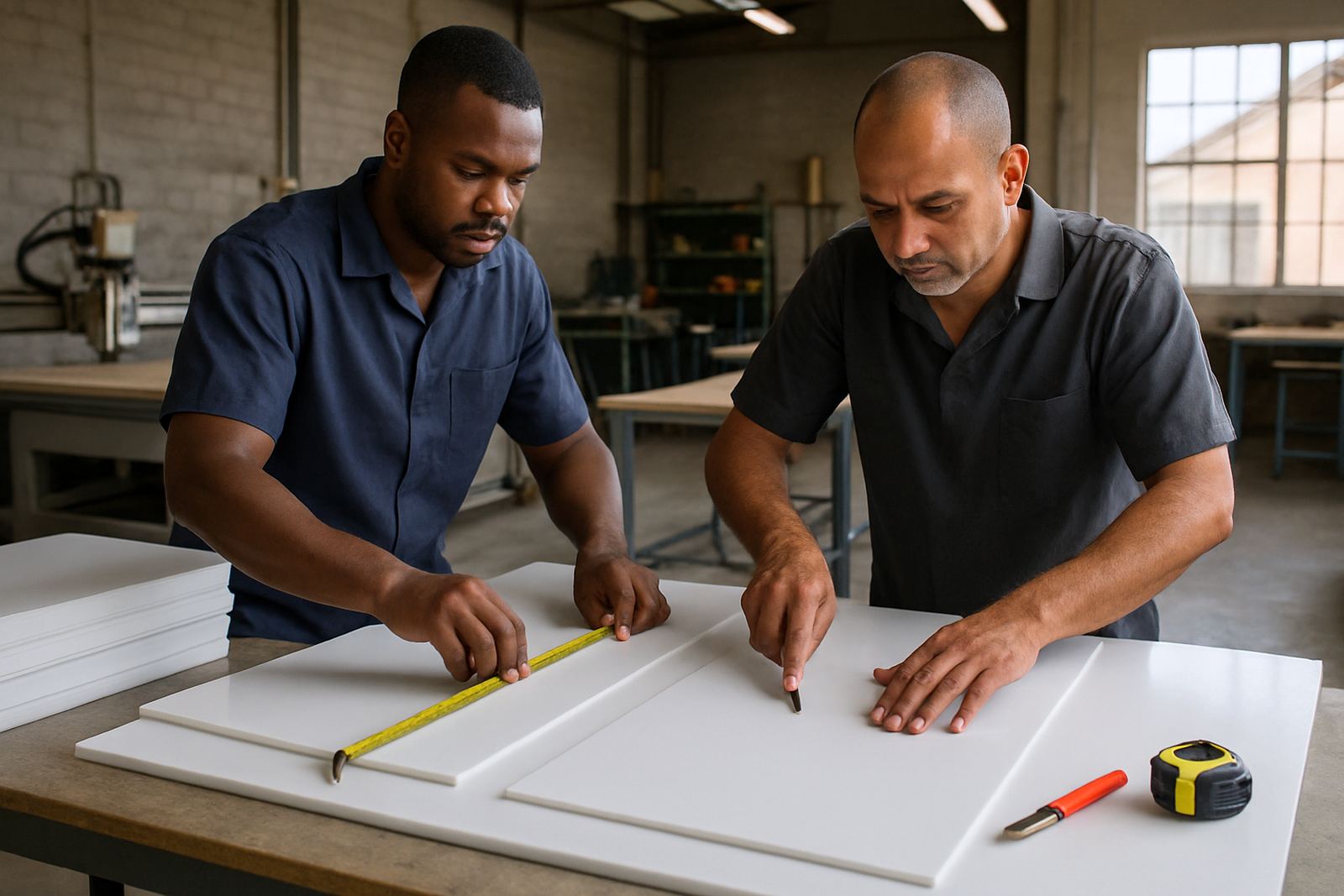
Cut to size is simple in principle but critical in practice. Sheets, rods, panels, and blocks are prepared to the required dimensions before they reach the fitter or installer. That means less handling, less waste and fewer chances for damage during trimming.
For engineering plastics, the right size matters even more because material choice and finish affect how a part performs. A cleanly cut piece can go straight into a machine housing, a light box, a guard, or a signage assembly with very little prep. That saves labour and keeps the job on schedule.
- Reduced trimming on site or in the workshop
- Less scrap from full sheets and oversize stock
- Better consistency on repeat jobs
- Faster turnaround on repairs and replacement parts
Where accurate sizing helps most in Cape Town jobs
Across Table View, Milnerton, Blouberg, Parklands, Durbanville, Montague Gardens and Paarden Eiland, workshops deal with a lot of mixed work. One day it is a sign repair for a retail tenant, the next it is a machine cover, a mounting plate, or a sandblasting mask. Tight sizing helps on all of them.
Coastal humidity and load-shedding also create practical issues. Materials that fit properly are quicker to fit and less likely to sit around waiting for the next power window or weather break. On jobs near the coast, a better initial cut also means fewer open edges and less handling, which helps keep the finish neater.
- Sign panels and light box faces
- Machine guards and inspection windows
- Spacer blocks, mounting plates, and liners
- Engraved labels and control panels
How it saves money on repairs and fabrication
Material waste is only one part of the cost. Labour, machine time, and fitting time can cost more than the sheet itself. If a part is oversize, the workshop uses extra time on the saw or CNC table, then more time on test fitting, and maybe more time again when a second cut is needed.
Cut to size supply helps reduce those repeat tasks. The fitter can go straight into assembly, sealing, drilling, or installation. For a business that runs mixed jobs during the week, that means fewer interruptions and better use of staff. It also makes pricing easier because you know what is coming into the workshop and what will be going out.
For small replacement jobs, that matters a lot. A single replacement panel should not have to hold up a larger order because it needs one more round of trimming. With the right dimensions from the start, it can be fitted the same day in many cases, depending on the material and finish required.
Why engineering plastics need proper preparation
Engineering plastics behave differently from timber, metal, and ordinary plastic sheet. Some materials need cleaner edges, tighter tolerance, or specific hole positions to perform properly in service. If the part is rough cut, it may crack, chip, or sit unevenly when fixed in place.
Good preparation is especially important when parts will be drilled, engraved, routed, or installed in areas with vibration, sunlight, or moisture. In workshops across Cape Town, that means taking care with the initial cut so the part does not need force to fit. A forced fit can shorten the life of the part and the assembly around it.
- Cleaner fit for machined components
- Better edge quality for visible sign parts
- Less stress on fixings and fasteners
- More reliable results on repeat production
A local example from Table View and Milnerton
A common local job involves a shop or light industrial client needing a replacement panel, a printed sign face, and a few cut pieces for a repair all at once. If the material comes in oversize, the workshop has to measure, trim, test fit, and sometimes redo one piece because a screw pattern or rebate was missed. That can hold up the whole order.
When the pieces are supplied cut to the required size, the team can move straight to the next stage. The installer gets a cleaner handover, the client gets a faster return to service, and the workshop keeps its machine time open for the next job. It is a simple difference, but on a busy week it can save hours.
That is why many trade customers prefer to have their cut to size plastics and parts prepared as part of the job rather than as a separate step. It keeps the job organised and makes repair work far less disruptive.