What plastic washers do in a working assembly
Plastic washers are used between a fastener and the part it clamps to reduce wear, spread pressure and stop direct metal-to-metal contact. In electrical jobs they help with insulation, while in wet or salty conditions they hold up better than plain steel hardware. On coastal sites around Blouberg and Milnerton they are often chosen because they do not rust, stain or leave orange marks on paint and coated panels.
We make washers from engineering plastics in set batches or as one-off cut parts. That means you can order a small quantity for repairs, or a repeat run for a fitter, panel builder or maintenance team that needs the same dimensions every time. The washer face is neat and square, and the bore is machined for a cleaner fit than a rough hand-cut piece.
Sizes, thicknesses and material options
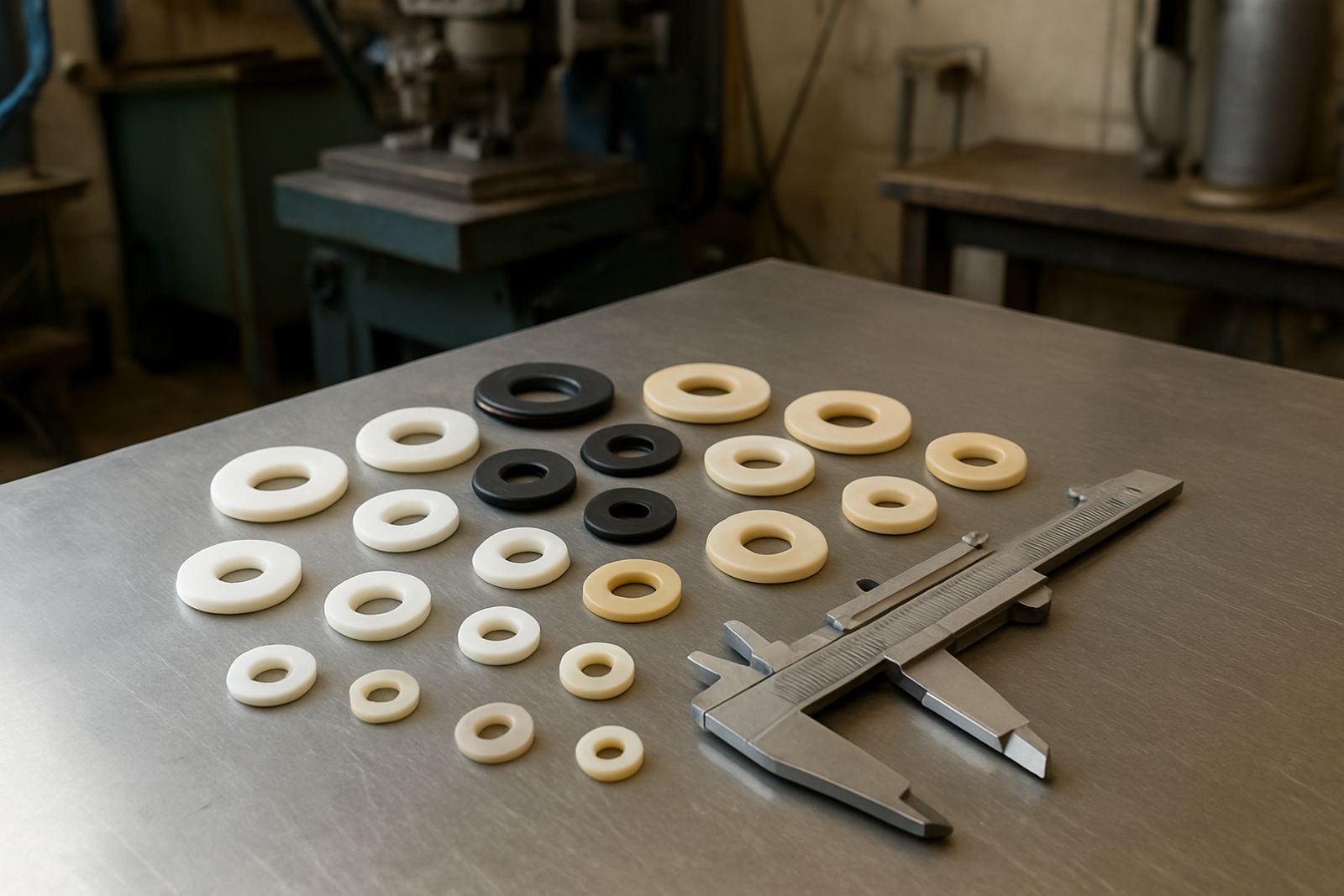
Washer size depends on the bolt, the load and the environment. Some jobs need a slim spacer for light clamping, while others need a thicker washer to bridge a soft surface or protect a painted finish. We machine to the size you specify, with the option to match standard fastener diameters or make custom sizes for special fixings and imported hardware.
- Inside diameters for common fasteners and custom bore sizes
- Outside diameters for wider load spread or compact fittings
- Thickness options for light, medium or heavy clamping
- Round, square or special-profile washer sets
- Material choices for electrical insulation, wear resistance or chemical resistance
- Clearance sizing for neat fit on painted, coated or powder-coated parts
For many customers the best choice is a washer that fits cleanly with a small amount of working clearance. Too tight and it can bind, too loose and it can shift under vibration. We check these tolerances before machining so the finished parts are easier to install on site.
Where plastic washers suit best
These washers suit switchgear, control panels, machine guards, mounting frames, pump skids, signage brackets, coastal fixings and general maintenance work. They are also useful where a non-conductive spacer is needed between components, or where stainless fasteners are used and the customer wants to avoid marking the facing material. In dusty industrial areas, plastic washers can be replaced quickly during service without needing special treatment.
- Electrical and control equipment
- Corrosion-prone installations near the coast
- Light industrial assembly and maintenance
- Sign brackets and mounting points
- Workshop repairs and retrofit work
- General fabrication where a clean spacer is needed
If your application sees heat, vibration or constant wash-down, we will ask a few questions before cutting. The right material and thickness matters more than people think, especially where load is shared across a small contact area.
How we machine and install them
We machine washers in our workshop using cut-to-size and CNC processes, so the edges are clean and the bore stays accurate across the batch. For installation, the washer is placed under the bolt head or nut, depending on the fixing design. On some jobs it sits behind a panel or under a bracket to keep the parts aligned and prevent chafing. Where a washer forms part of an insulating stack, the full fastening arrangement should be checked before torqueing.
There is no gas requirement for the product itself. For machining, cutting and fitting we use workshop power and standard fabrication equipment. If your site is affected by load-shedding or you need staging for a shutdown, we can plan production in advance so the parts are ready when the maintenance team arrives. That helps on jobs in Montague Gardens, Paarden Eiland and other areas where access windows are tight.
Care, replacement and service life
Plastic washers are low maintenance, but they should still be checked during routine inspections. Look for cracking, flattening, heat marks, chemical attack or elongation around the bore. If a washer has been over-compressed it may no longer spread the load properly, which can lead to loosened fixings or surface damage. In coastal conditions, periodic replacement is worth the small cost.
- Inspect after the first service interval on new installations
- Replace any washer with visible distortion or splitting
- Keep spare sets for high-use maintenance points
- Store indoors away from direct sun and solvents
- Use the same size and material on matching assemblies
For outdoor equipment, a washer that looked fine at installation can age faster than the metal around it. UV, chemical splash and repeated tightening all play a part, so a simple visual check goes a long way.
What to check before you order
When ordering plastic washers, the most important details are the fastener size, the hole diameter, the outside diameter and the thickness. If you have a sample, bring it in or send clear measurements. If the part is for electrical use, tell us whether it needs to insulate, space, seal or only protect the finish. If it is for a machine or bracket, tell us the load direction and whether the assembly vibrates. It helps us choose the right material and machining method first time.
Please also tell us where the washer will be used, because a workshop part and a seaside part are not the same. A washer for a dry indoor panel in Durbanville may not need the same chemical resistance as one fitted on a coastal frame in Table View. If you need a repeat batch, keep one sample labelled and stored with the job card so future replacements stay consistent.
Key facts
| Product type | Machined plastic washers |
|---|---|
| Use cases | Electrical insulation, corrosion-resistant assembly, general industrial spacing |
| Material options | Engineering plastics selected to suit load, wear and environment |
| Size range | Custom inside diameter, outside diameter and thickness |
| Finish | Clean-cut edges with accurate bore sizing |
| Supply format | Single pieces, sets or repeat batches cut to order |