Why big panels need more than a strong pair of hands
Large sign faces and engineering plastics look simple when they are lying flat, but the trouble starts as soon as they are lifted, turned or loaded onto a vehicle. A 3 metre by 1.2 metre panel can flex under its own weight, especially if it is thin, warm from the sun, or cut with openings for fixings and lights. The bigger the sheet, the more it behaves like a sail in a sea breeze, and a gust in Table View or Blouberg can shift it quickly.
Handling matters because damage is not always obvious at first. A hairline crack near a corner, a slight bow in the middle, or scuffing on the visible face may only show up once the panel is mounted and lit. That becomes costly on a busy job where traffic, time and access are all tight. Good handling keeps the panel square, keeps the finish clean, and protects the final install.
At Blouberg Signz & Engineering we see this often with sign faces, cut to size plastics and routed components headed for shops, offices, warehouses and site hoardings across Table View, Milnerton, Parklands and Durbanville. The material may be different, but the rule stays the same: support it properly or expect problems later.
How panels get damaged between workshop and site
The workshop is usually controlled. The road is not. Panels can be marked by straps pulled too tight, bent by poor stacking, or chipped when they are slid across rough floors and concrete. On coastal jobs, salt in the air and moisture can also affect protective films and exposed edges if the panel sits around too long before install.
Common handling faults include:
- Picking up a panel from one end only, which causes flex and cracks near the centre
- Dragging sheet material over gravel, paving or steel surfaces, which scratches the face
- Stacking large items without spacers, which leaves pressure marks and warping
- Leaving cut acrylic or plastic in direct sun on the bakkie, which can soften edges and distort flatness
- Using hard tie downs across visible surfaces, which can bruise the panel or mark print work
Vehicle branding panels, light box faces and sandblasted pieces are especially sensitive because the finish is part of the product. A damaged panel may still fit, but it will not present well once installed.
The right way to lift oversized sign faces
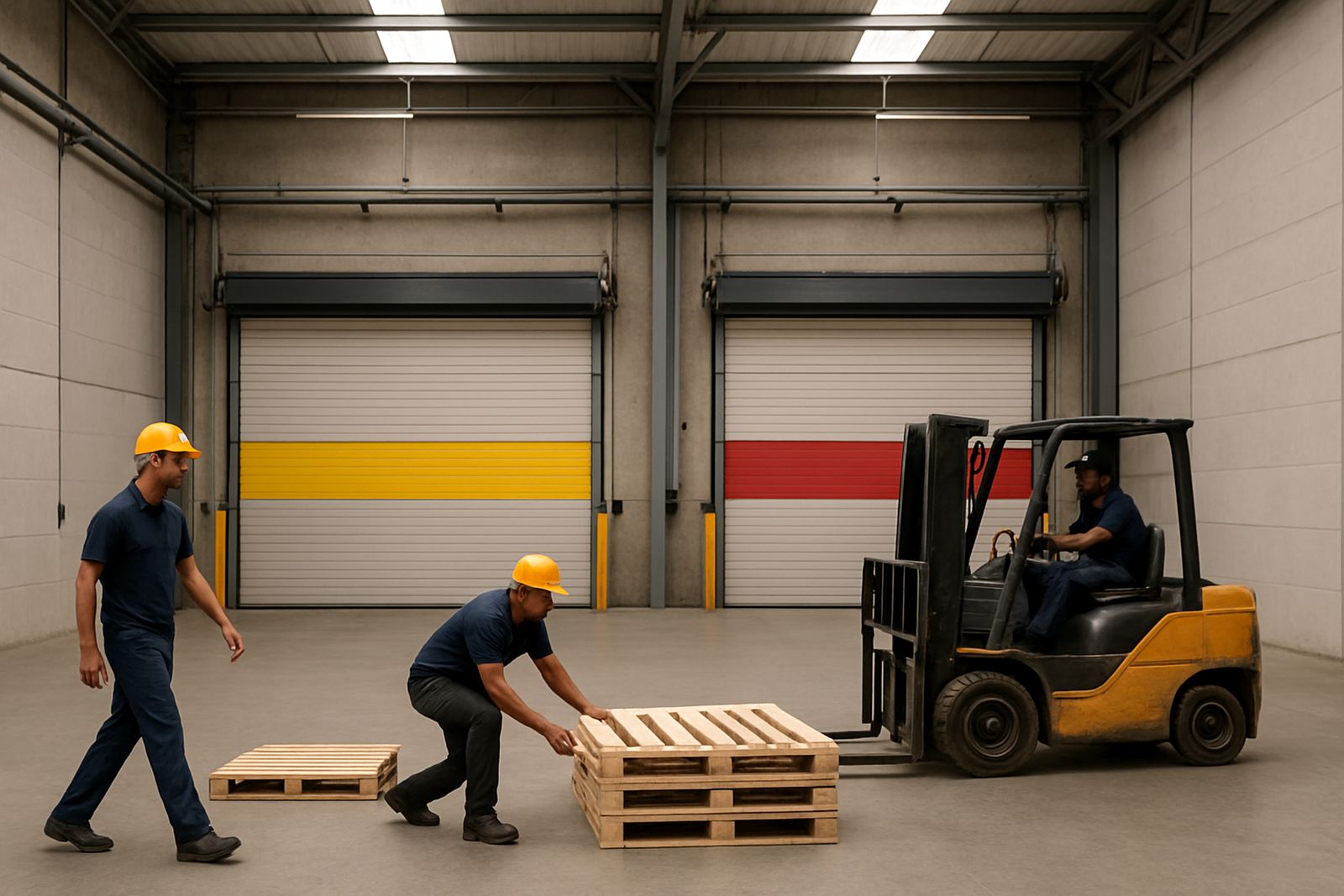
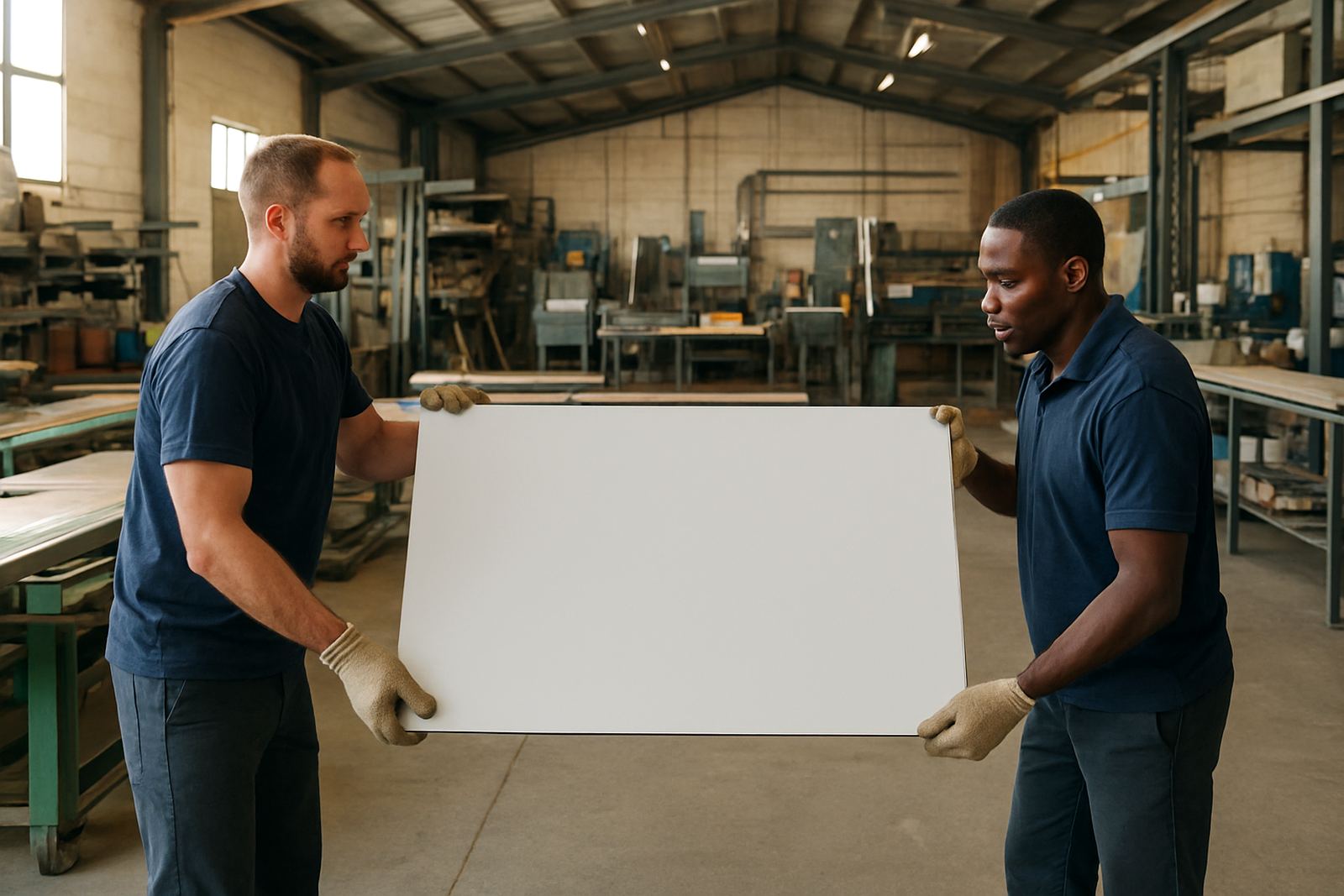
Good lifting starts before the panel moves. The route should be clear, the vehicle ready, and the team briefed on where each hand goes. Large sheets need two or more people, and in some cases a frame, suction lifters or soft slings to keep the load even. If the piece has cut-outs, corners or long spans, those weak points must be supported during every lift.
For sign faces and engineering plastics, these habits help:
- Lift from the longest edges where possible, not from a single corner
- Keep the panel upright only when it is safe to do so and when wind will not catch it
- Use clean gloves so oil and dust do not transfer to the surface
- Check that the path to the vehicle and the site has no narrow turns, loose gravel or low obstacles
- Store the panel flat on a clean, level surface with padding between each layer
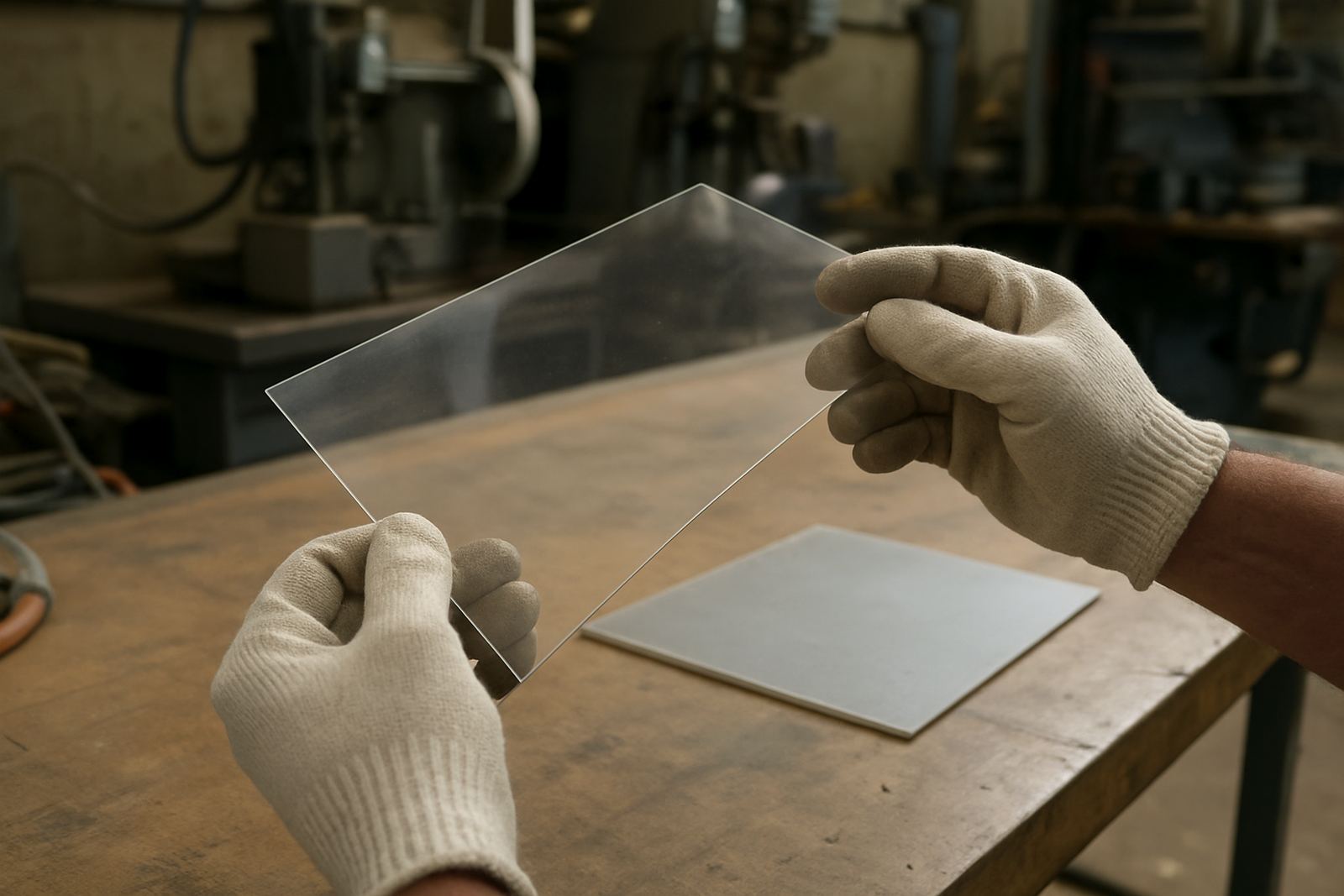
In our workshop, panel movement is planned around the size, finish and final application. A PVC face, a clear plastic sheet and a routed engineering plastic part all travel differently. What works for one may damage the next, so the method must match the material.
Transport around Cape Town needs a proper loading plan
Once a panel leaves the workshop in Table View, transport becomes the next risk. Cape Town routes can include stop-start traffic, side winds, speed bumps, tight industrial roads and short delivery windows. If the panel is not secured correctly, it can twist during a hard brake or shift when the vehicle turns.
We plan loads so that large pieces are not forced against rough tools, metal frames or loose hardware. Clean separators, edge protection and even pressure across the load all matter. This is even more important for jobs going to Montague Gardens or Paarden Eiland, where delivery traffic can be heavy and unloading space may be limited.
For wet weather, the load also needs protection from moisture ingress. A soaked cardboard spacer or a panel left under a dripping canopy can create staining, especially on finished face material. Around the coast, humidity adds to the risk, so the panel should not be sealed into a damp bundle and forgotten until the site crew arrives.
On site, handling is part of the installation
Installation crews often focus on brackets, screws, rails and alignment, but the handling stage is just as important. A perfectly measured panel can still fail if the lifting points are wrong or if the team forces it into place against a warped wall or uneven frame. That is why we inspect the surface, check the fixing points and confirm the final position before the panel goes up.
For safety signage and light box fabrications, correct handling also supports compliance and function. Damaged edges, broken corners or a cracked face can reduce visibility, let in dust, or create a poor seal. In industrial areas and public-facing sites, that is not only untidy but can become a maintenance issue sooner than expected.
When the work involves cut to size plastics or engraved components, even small misalignment can affect the fit. A panel that is slightly out of square may force the installer to rework holes on site, and that is time lost for the client and the crew.
A local example from Table View to Durbanville
One recent job involved a large sign face and several plastic components going from Table View to a site near Durbanville. The route itself was not the problem. The issue was the size of the main panel, which needed to pass through a narrow service area and then be lifted into position on an elevated frame. If that sheet had been carried by two corners only, it would have flexed badly and likely marked the print.
Instead, the team used an even lift, kept the sheet upright for only the shortest time needed and protected the face during loading and unloading. The result was a clean install with no edge damage, no extra trimming and no delay on site. That kind of outcome does not come from luck, it comes from planning each move from workshop to final fixing.
It is the same with larger runs for businesses in Blouberg, Parklands and Milnerton. The better the handling, the less waste, fewer call-backs and the neater the final presentation. Customers often notice the result before they notice the effort behind it.
What proper handling saves in the end
Large panel handling is about more than avoiding scratches. It saves material, time and labour, and it protects the standard of the finished sign or plastic component. In practical terms, that means fewer replacements, less rework and a cleaner handover to the client.
For businesses that need sign manufacture, installation, CNC routing, plastic machining or maintenance, the best approach is to build handling into the job from the start. That includes choosing the right support method, planning the vehicle load, protecting the finish and coordinating the site team before the panel arrives.
At Blouberg Signz & Engineering, we handle oversized work every day for clients across Cape Town, from Table View and Blouberg to Montague Gardens and Paarden Eiland. The material may be big, but the handling should still be precise.