What sandblasting is used for
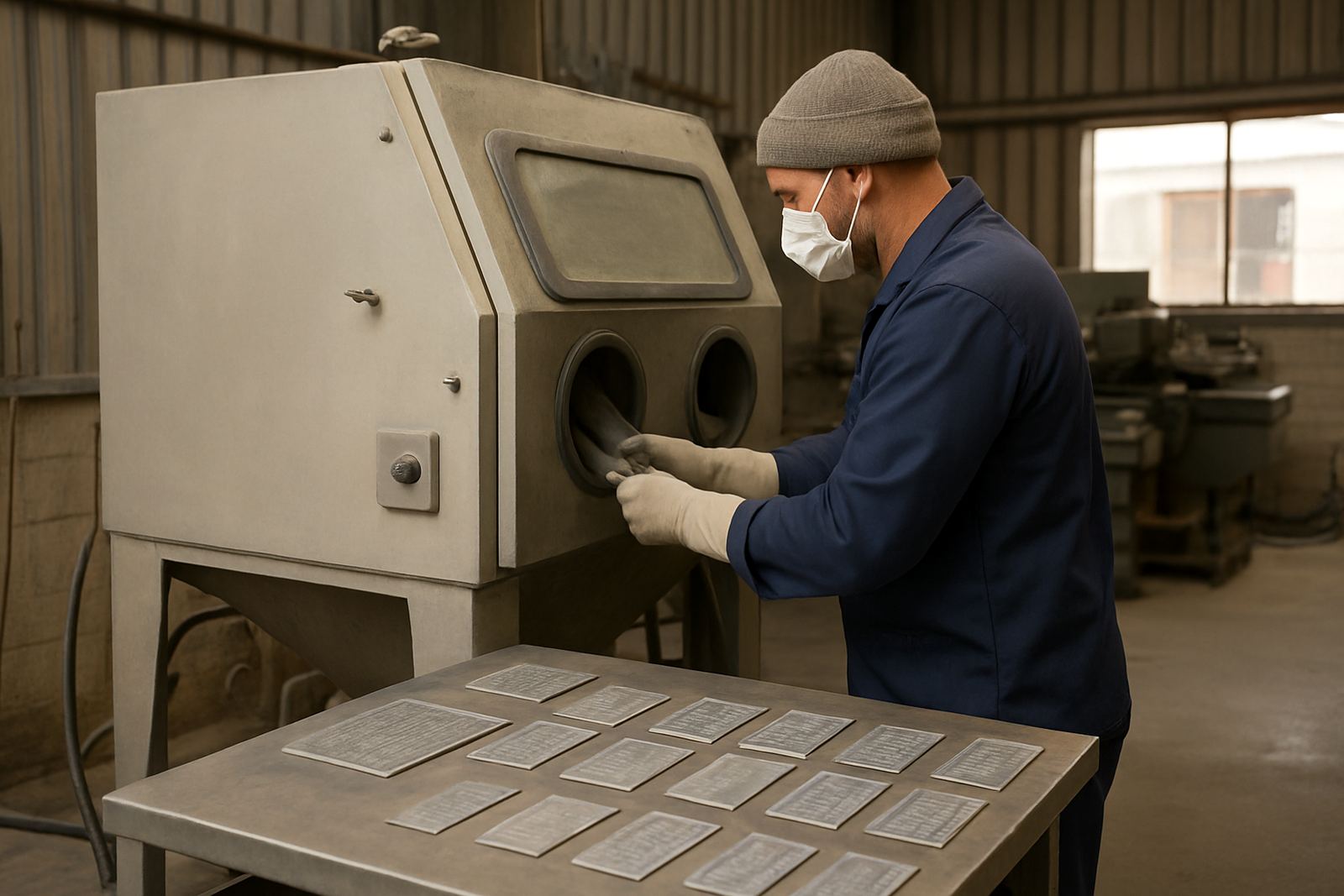
Sandblasting is a controlled surface treatment that uses abrasive media and air pressure to remove material or roughen a surface in a precise way. It is useful when a client wants frosted glass, a shallow etched panel, a keyed finish for paint or adhesive, or a consistent matte look on selected areas only. We use it on sign plates, decorative panels, glass, steel, aluminium and certain plastics once the material has been checked for suitability.
For businesses in Table View, Blouberg and surrounding industrial areas, sandblasting is often the practical choice when a part must look clean, take paint properly or hold a coating better in the coastal air. It works well on shopfront elements, office partition glass, display pieces, name plates and prepared engineering parts. If the finish must stay neat over time, the surface must be blasted evenly, with the right media and the right pressure for the substrate.
Included in the sandblasting service
Our service covers more than the blasting itself. We assess the item, prepare the masking, set the depth and finish, and clean up the part after treatment. Where required, we can also supply cut-to-size masking, engraved detail, or follow-on painting and fitting for sign work.
- Surface inspection and material check before blasting
- Mask layout for logos, wording, panels and borders
- Controlled blasting for frosted, etched or keyed finishes
- Cleaning and final inspection before release or installation
- Optional combination with sign manufacture or CNC cut parts
For glass, we work carefully to avoid chipping at the edges and to keep the blasted area consistent from panel to panel. For metal sign plates and prepared surfaces, we aim for an even texture that gives paint and coating a better grip. If a surface has old adhesive, light corrosion or uneven previous work, we will say so upfront before we start. That saves time and avoid wasted material.
How we prepare and blast each job
Good preparation is what makes the finish look professional. We begin by checking thickness, edge condition, existing coatings and whether the item can handle the chosen media. A panel that is too thin, already cracked or badly warped may need a different method. Once the work is approved, we mark the blasting area and protect every section that must stay untouched.
- Step 1: Confirm material, size and finish required
- Step 2: Prepare artwork, stencil or masking pattern
- Step 3: Test the blast pressure on a sample or hidden area
- Step 4: Blast in controlled passes to keep the finish even
- Step 5: Remove masking, clean the part and inspect the result
Pressure is adjusted for the job, because glass, aluminium and steel all react differently. Fine media and lower pressure are often used for decorative glass and detailed sign work, while prepared metal can take a more direct treatment when a stronger key is needed. The goal is always a neat result with as little distortion as possible.
Typical turnaround for local jobs
Turnaround depends on the size of the batch, the amount of masking and whether the part needs artwork or after-finish work. Small items and straightforward sign plates can often be turned around quickly, while larger panels, multi-part sets and work that must be matched across several pieces will take longer. If the job needs to be combined with signage manufacture or CNC machining, we plan it in the correct order so nothing is rushed.
For most local clients in Table View, Blouberg, Milnerton and Parklands, the process is usually straightforward once measurements and artwork are approved. Projects with decorative glass or repeated branding may need a sample run first, especially when the finish must match existing work. We will always tell you if the timing changes because of weather, load-shedding, material supply or the condition of the part. In the workshop, clean power and dry conditions matter for a consistent finish, so schedule sometimes shifts a bit.
Pricing for sandblasting work
Pricing is based on the size of the item, the surface type, the amount of masking, the detail in the artwork and whether the job is a single piece or a production run. A simple keyed finish on a prepared plate will price differently from a detailed frosted glass panel with repeated masking and fine text. We quote on the actual work needed, not on a one-size-fits-all rate.
For local businesses, this makes budgeting easier because you only pay for the process that the job really needs. If a client wants a full sign package, we can price the blasting together with fabrication, routing, engraving or fitting. That often gives better value on larger projects and keeps the finish matched across the full order.
- Simple flat items with limited masking are the quickest to price
- Detailed artwork, logos and repeated panels need a more detailed quote
- Bulk or repeat work can be priced per item or per batch
- Any repair work, old coating removal or edge preparation is quoted separately if needed
We prefer to see clear sizes, photos and any artwork before confirming cost. That way there are no surprises later on.
Care, maintenance and repeat intervals
Sandblasted finishes are durable, but they still need the right care. On glass, regular cleaning with a soft cloth and a mild cleaner is usually enough. Avoid harsh scouring pads and strong abrasives, because they can leave the surface looking patchy. On metal sign plates and keyed parts, the finish should be checked during routine maintenance, especially near the coast where salt air can work into edges and fixings.
For exterior signs, we recommend a visual check every 6 to 12 months, depending on exposure. In coastal areas like Blouberg and Milnerton, it is sensible to inspect at shorter intervals if the item faces wind, sea spray or direct sun. If a blasted surface is part of a painted or coated system, touch-ups should be handled before rust or lifting spreads. Where the item is used in a production or engineering setting, it may need earlier rework if the keyed surface wears smooth or contamination builds up.
If you are maintaining a fleet of sign plates or a set of branded panels, we can keep the finish consistent across future runs. That helps when replacements are needed after damage, tenancy changes or updates to branding. It also saves time because the process does not need to be reworked from scratch each time.
Key facts
| Areas served | Table View, Blouberg, Milnerton, Parklands, Durbanville, Montague Gardens, Paarden Eiland and Cape Town |
|---|---|
| Common materials | Decorative glass, sign plates, aluminium, steel and selected engineering plastics |
| Finish options | Frosted, etched, matte, keyed surface and masked detail |
| Typical use cases | Shopfront glass, office panels, name plates, branding pieces and prepared surfaces |
| Turnaround | Depends on size, masking detail and batch quantity; small jobs are often quicker |
| Maintenance interval | Visual checks every 6 to 12 months, shorter near the coast or in heavy-use areas |