Start with the real purpose of the pylon sign
Before you choose a size or style, decide what the sign must do. A pylon sign is not just a name board. It needs to guide traffic, identify your site from a distance, and carry the right message for people passing at speed. On commercial properties in Table View, Milnerton, Parklands and along the main Cape Town routes, that usually means clear lettering, enough height to clear parked vehicles and low boundary walls, and a face that can be read in a few seconds.
Think about who sees it first. Drivers in the near lane, trucks entering a yard, delivery vehicles looking for a back entrance, or customers arriving after dark. That will affect whether you need one face or two, whether the sign needs lighting, and whether the message should be limited to a business name and arrow or include a tenant directory. If the site sits close to a coastal road, factor in wind load and salt air from the start, because those conditions are hard on steelwork and fixings over time.
Check the site before you commit to a size
A proper site check saves a lot of expense later. Measure the verge, boundary wall, setback from the road, and the highest point where the sign can sit without blocking visibility for vehicles turning in and out. If the site is on a corner, check both approaches, because the best position from one direction may be useless from the other. Also look for underground services, overhead cables, stormwater channels and any municipal servitudes.
In many business areas, the property layout changes what is possible more than the sign itself. A narrow frontage may need a slimmer post and a taller blade. A deeper site may allow a freestanding pylon with a larger panel. If there is already a monument sign or wall sign, the new pylon should work with it, not fight for attention. For estates, retail parks and industrial yards, site rules can also limit size, lighting and branding colours.
- Measure the frontage, entrance position and viewing distance.
- Note any trees, poles, walls or parked vehicles that block sightlines.
- Check the ground for services before any excavation.
- Confirm whether the sign must face one road or multiple access points.
- Keep a record of the best viewing height for cars and trucks.
Choose the right structure for wind, light and maintenance
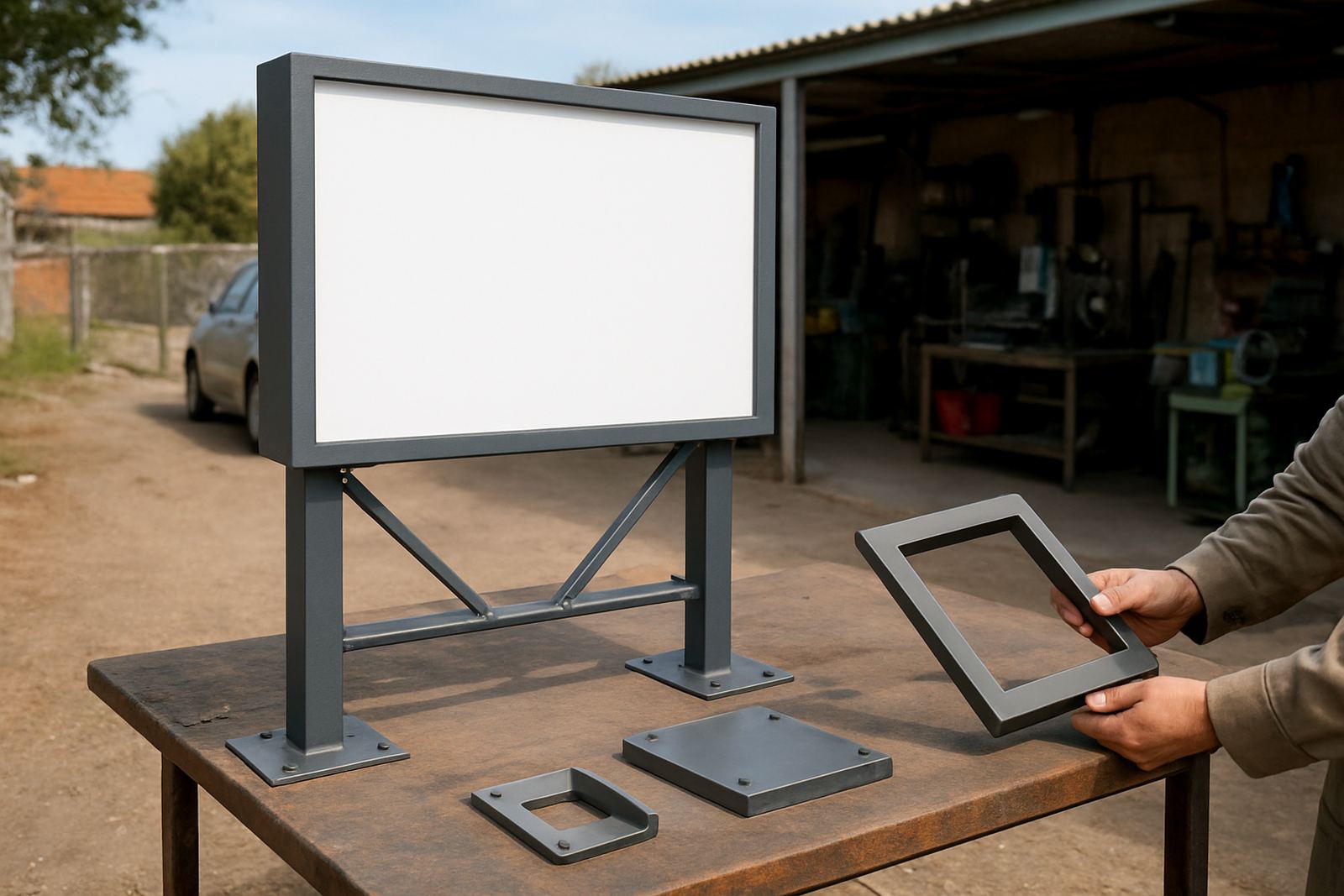
Pylon signs are exposed to wind all day and night, so the support structure matters as much as the face. In coastal areas around Blouberg and Table View, corrosion resistance should be part of the design brief, not an afterthought. Galvanised steel, properly coated aluminium and suitable fasteners help the sign hold up better in salty air. The base must also be strong enough for the height of the sign and the local conditions.
If the sign includes lighting, plan for load-shedding and service access. Light boxes, internal illumination or external flood lighting each have different power and maintenance needs. A sign with a clean access panel is easier to service when a transformer, LED strip or wiring fault needs attention. For some sites, the better option is a simple face with reflectivity or externally mounted lighting, especially where the business only needs clear identification after dark.
There is also the question of upkeep. A high sign with no easy access can become a problem when bulbs fail, panels fade, or a storm knocks the face loose. Make sure the structure allows inspection and cleaning without awkward scaffolding every time. That matters for safety as well as cost.
Plan the message so drivers read it quickly
A roadside sign is read in motion, not at leisure. Keep the wording short and legible. The business name should do most of the work, and any extra wording should support wayfinding rather than clutter the face. If the property has multiple tenants, decide early whether the pylon will show only the site name or a directory panel. Too much text reduces legibility, especially when drivers are turning or traffic is moving fast.
Letter height, contrast and spacing all matter. Dark text on a light face or light text on a dark face usually works best, but the final choice should suit the building, the surroundings and the distance from the road. Where the sign sits beside other commercial signage, it helps to use a layout that stands apart without becoming noisy. For the best result, the design should be readable in rain, bright sunlight and at night if the sign is lit.
- Use one clear primary message.
- Keep contact details off the roadside face unless the sign is large enough.
- Leave enough space around letters for legibility at speed.
- Match the sign height to the viewing distance, not just the available space.
- Include directional wording only when it helps motorists find the entrance.
Work through municipal and site approvals before fabrication
Before fabrication starts, check the local advertising and property rules that apply to the site. Some areas require consent for a freestanding sign, especially when it is close to a public road or visible from several directions. Other sites may need landlord approval, estate approval or an engineering note if the foundation is substantial. If the sign extends over a boundary or near the road reserve, those checks become even more important.
It is also wise to confirm the exact ownership of the land and whether there are any restrictions in the lease. A tenant may want a large pylon sign, but the landlord may only allow a smaller one or shared branding. When approvals are sorted first, the fabrication drawings can be made to suit the final position, size and foundation. That saves time and reduces rework later.
A practical sign supplier should be able to prepare drawings, discuss the structure and assist with the installation plan. For businesses across Cape Town, from Montague Gardens and Paarden Eiland through to Durbanville and Milnerton, this keeps the project moving without guesswork. It also gives the client a clean paper trail if the municipality asks for details later.
Use a simple checklist before installation day
Installation day goes better when the groundwork is already done. The base must be ready, the panel size checked, the artwork approved and the access route clear for the crew and equipment. If the sign is heavy or tall, the lifting plan should be discussed in advance so there are no delays on site. Weather matters too, because strong wind can stop a safe install, especially on open sites near the coast.
For businesses that want long service life, ask for a maintenance plan at the same time as the build. That can include bolt checks, cleaning, repainting where needed, electrical testing and replacement of worn parts. Sandblasting, cut-to-size plastics and CNC machining can also help when a sign needs new panels or a replacement face later on.
- Foundation complete and cured where required.
- Final artwork approved and measured against the actual frame.
- Power supply checked if the sign is illuminated.
- Access clear for lifting equipment and installers.
- Weather and wind conditions suitable for the lift.
- Post-install inspection and handover scheduled.
When a pylon sign needs repair or an upgrade
Older pylon signs often show the same warning signs: faded faces, water inside light boxes, loose fixings, cracked plastic panels or corroded steel at the base. If the sign is still structurally sound, it may be more practical to refurbish it than replace everything. New faces, updated branding and better lighting can give the site a cleaner appearance without starting from scratch.
For industrial and retail sites, changes in tenant mix often mean the sign has to be updated anyway. That is where a workshop with signage manufacture and engineering capability helps, because a replacement panel can be cut accurately, engraved if needed, and fitted to the existing structure. A good repair should leave the sign cleaner, safer and easier to maintain. It should also suit the site as it is now, not as it was years ago.
Blouberg Signz & Engineering works from Table View and supports businesses across the surrounding commercial areas with sign manufacture, installation, maintenance, CNC routing and plastic machining. If you need a roadside pylon sign that suits the site and lasts in local conditions, the job starts with a proper measure and a clear plan.