Start with the job, not the material
Before you choose a plastic, define what the part must do. A sliding wear strip needs low friction and decent abrasion resistance. A spacer may need stiffness and accurate thickness. A guard has to keep people safe while still allowing visibility and cleaning. In Table View and the wider Cape Town area, we also look at heat, dust, coastal humidity and how often the part will be cleaned down.
For most workshop jobs, the right material comes down to five questions: will it slide, carry load, stand up to impact, handle chemicals, and keep its size over time. If the answer changes from one machine to the next, the grade and thickness should change too.
- Measure the contact area and movement path.
- Check the working temperature near motors, bearings or sunlight.
- Note exposure to water, oils, detergents or solvents.
- Confirm whether the part is structural, decorative or protective.
- Allow for expansion if the piece is long or fixed at both ends.
Common plastics and where they fit best
Some plastics are better for wear, others for impact or clean appearance. In a workshop, the most useful materials are usually tough enough for daily use but easy to machine to size. For sliding applications, low-friction plastics help reduce noise and the need for frequent replacement. For guards and covers, clarity and impact resistance matter more than slipperiness.
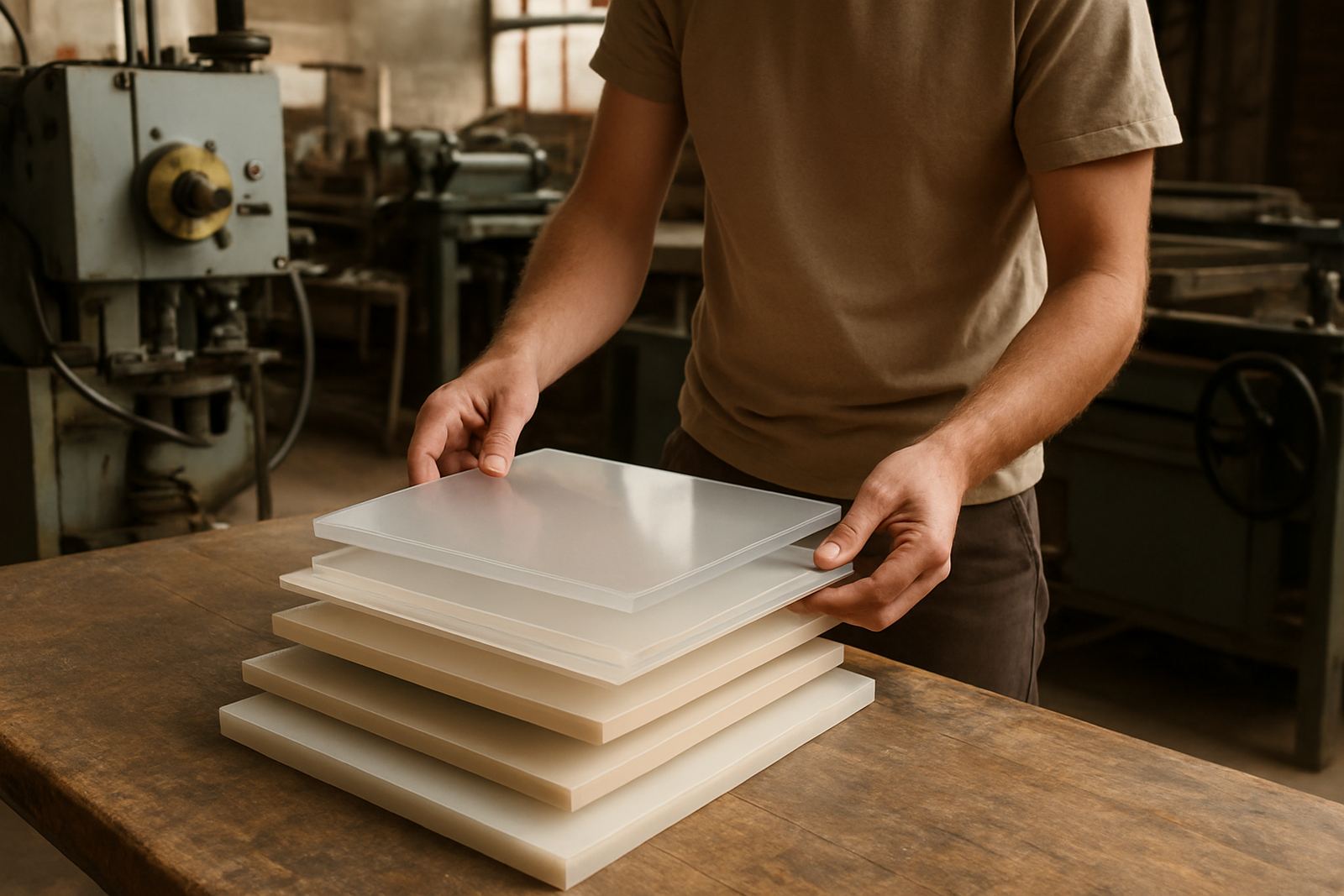
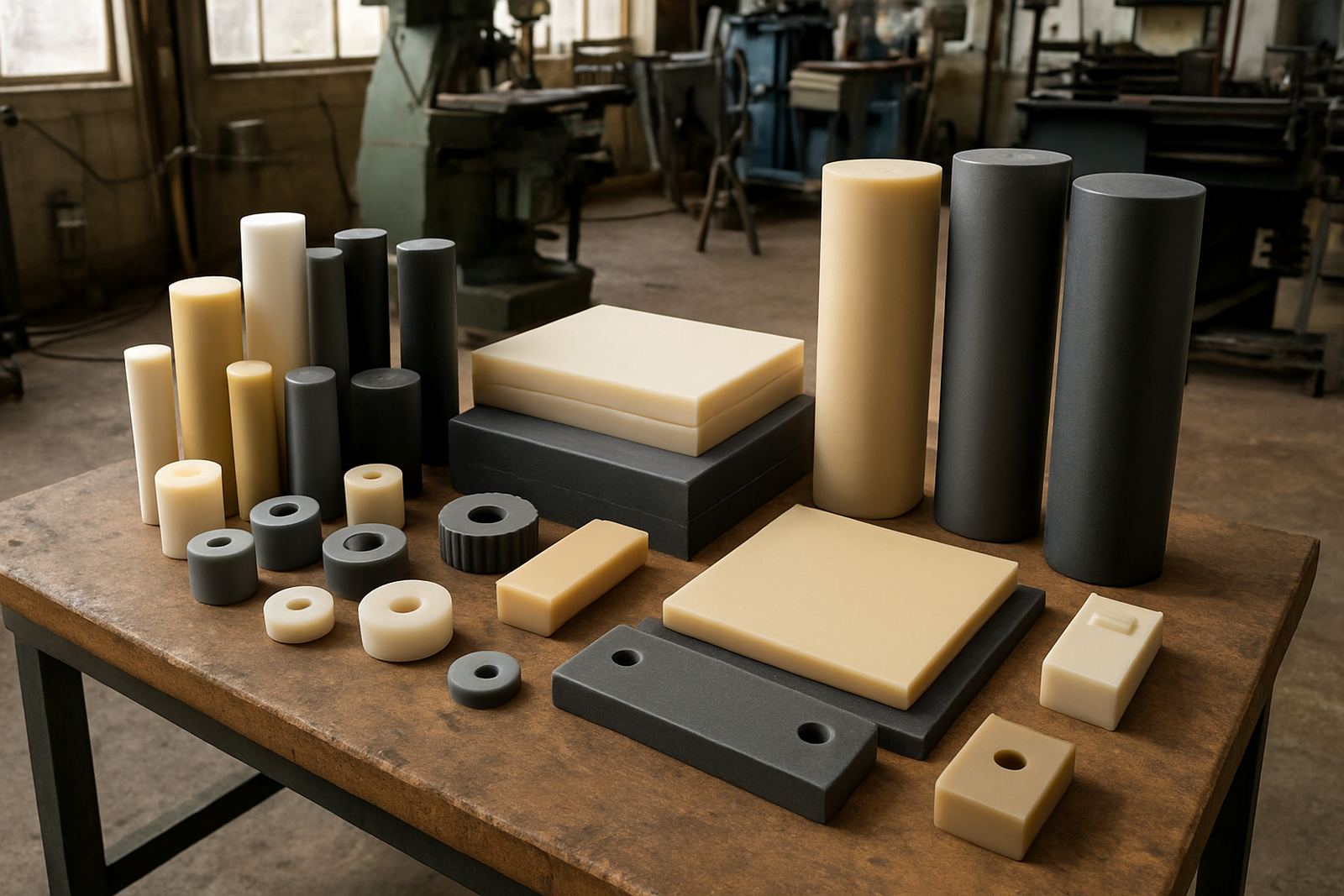
Acetal is often chosen for precise parts, bushes and sliding components because it machines neatly and holds dimensions well. UHMW polyethylene works well where you need low friction and good abrasion resistance, especially on guides and wear strips. Nylon is strong and useful for load-bearing parts, but it can absorb moisture and change size a little. Polycarbonate is used for clear guards where impact resistance is important. Acrylic gives a cleaner visual finish, but it is more brittle and not ideal for rough handling. PVC sheet is practical for many general purpose covers, signs and light duty spacers.
- Acetal: precise parts, bushes, gears, guides.
- UHMW polyethylene: wear strips, runners, chute linings.
- Nylon: load-bearing components, rollers, spacers.
- Polycarbonate: machine guards, safety screens, impact covers.
- PVC: panels, light duty fittings, general workshop parts.
Wear strips, sliders and spacing parts
Wear and sliding parts fail for predictable reasons. They run dry, pick up grit, or flex too much under load. In areas like Montague Gardens, Paarden Eiland and Cape Town industrial sites, dust and fine metal offcuts can work into moving surfaces and accelerate damage. A good wear strip is thick enough not to dish out quickly and smooth enough not to catch on fast moving parts.
When making sliders or spacers, we check the direction of load and the tolerance required. A spacer that sits under a bracket may need to stay flat under torque, while a guide rail may need a slightly looser fit to allow thermal movement. If the part will be outdoors or near coastal air, the fixing method matters too. Stainless fasteners, proper washers and clean mounting faces help the plastic last longer.
- Use thicker sections where bolts compress the material.
- Leave room for expansion on long runs and full length guides.
- Avoid sharp internal corners that can start cracks.
- Keep edges chamfered where parts slide past one another.
- Check the part again after the first week of use.
Guarding and safety covers for workshop equipment
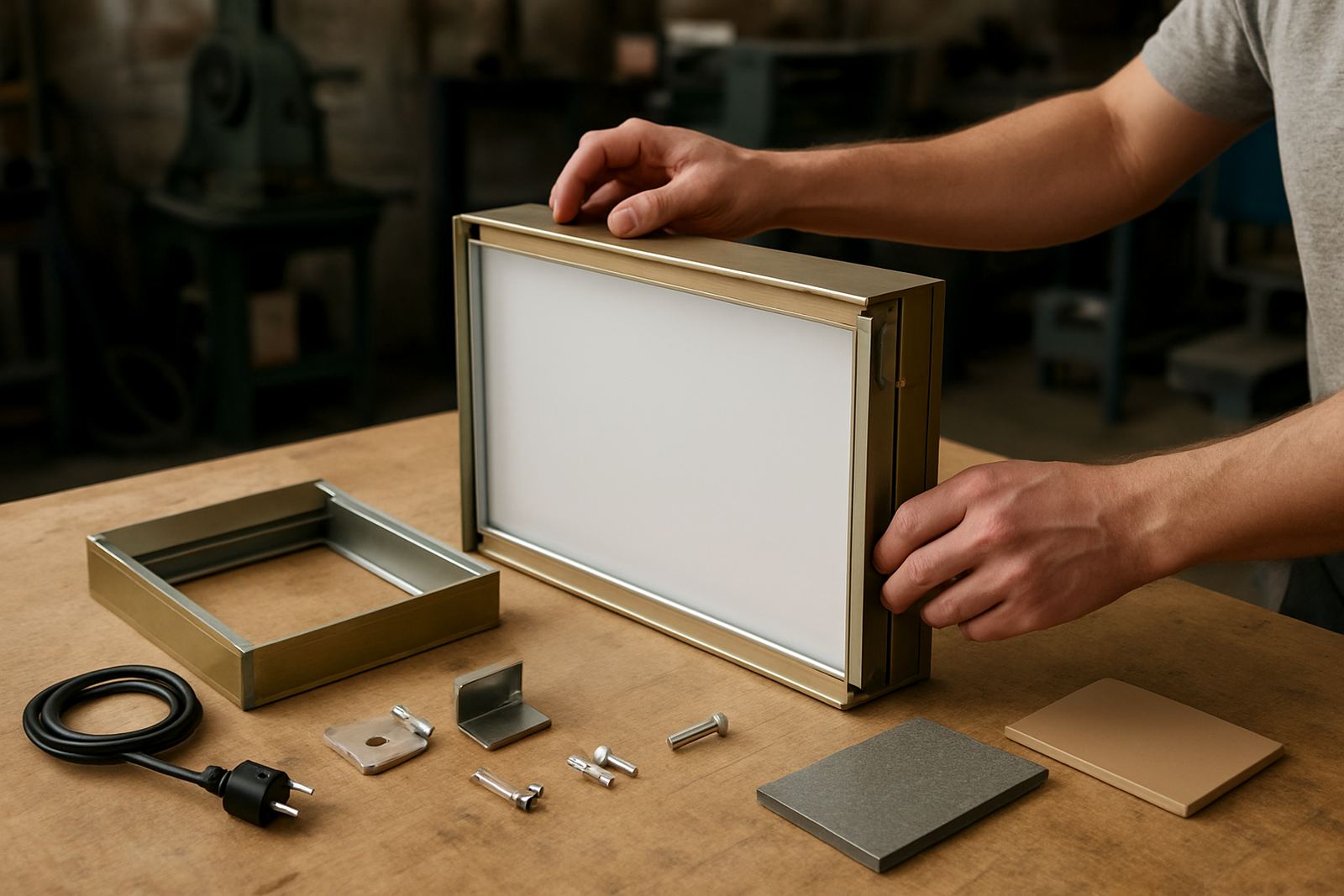
Safety guards need to protect people without making maintenance difficult. For transparent covers, polycarbonate is usually the first option because it handles impact better than brittle clear sheet. If the part is only a splash shield or light cover, a lighter grade may be suitable, but we still look at impact risk, heat and visibility. A guard should be easy to clean, fixed properly and fitted with enough clearance so it does not rub under vibration.
For machines in busy workshops, we also consider how the operator works around the part. Can the guard be removed for service? Is there a label, warning mark or cut out needed for viewing? Will dust or coolant cloud the surface over time? Good planning avoids repeated replacements and keeps the area neater, especially where inspections are done by clients, safety reps or municipal inspectors.
- Choose impact resistance first for moving machinery.
- Use clear material where visibility is needed for checks.
- Allow for hinges, latches and service access.
- Specify safe edge finishing on all exposed corners.
- Confirm the guard does not interfere with emergency stops or access routes.
Cut to size, CNC machining and engraving details
Plastic parts are only as good as the cut and the finish. A panel that is 2 mm out on one side can affect mounting holes, alignment and even the appearance of the whole job. CNC routing helps with repeatable shapes, clean edges and accurately positioned holes. For thicker engineering plastics, the right feed and cutter reduce heat build up and stop the material from melting at the edge.
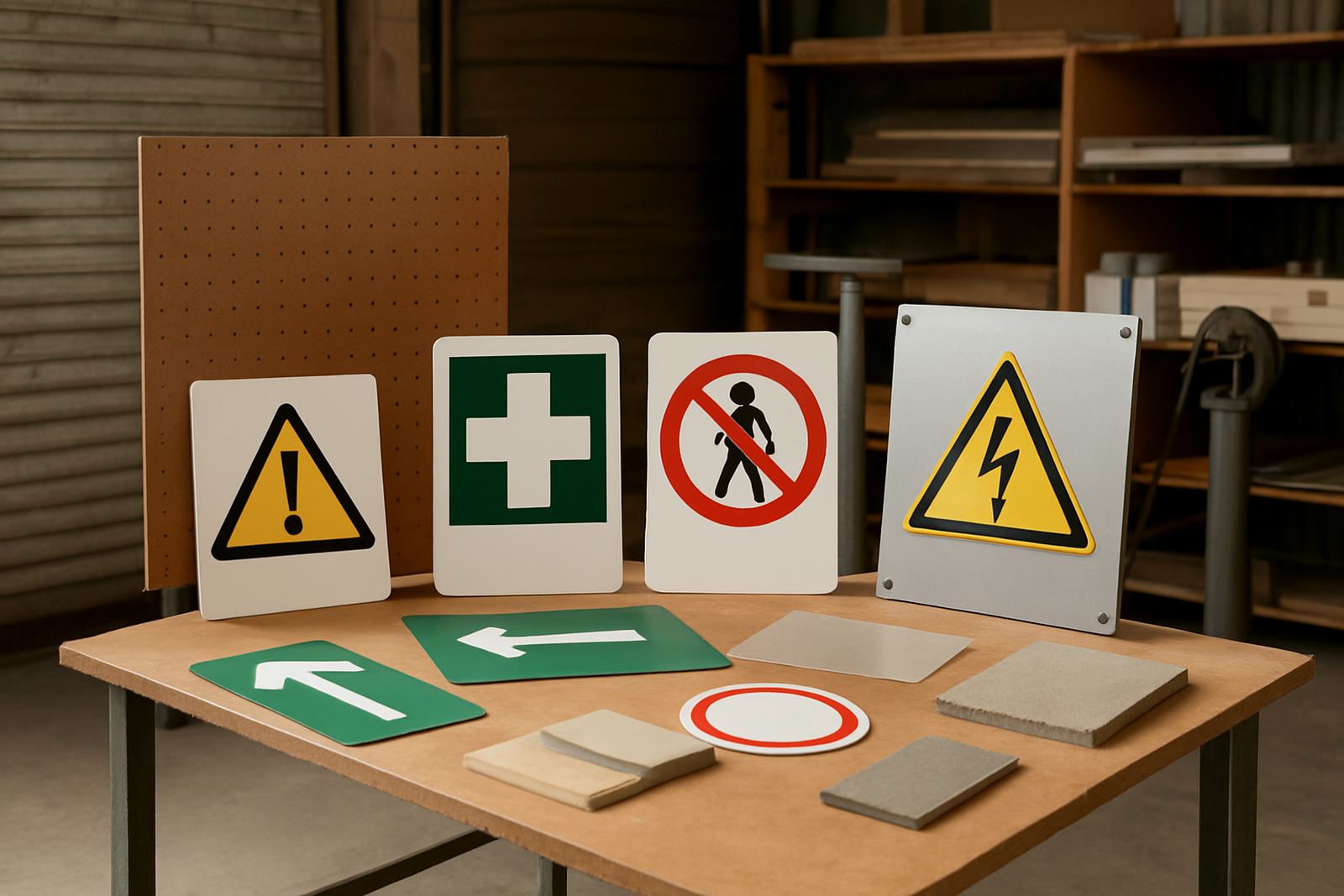
Engraving is useful for labels, direction markers, machine tags and warning text. On clear or coloured sheet, the depth and contrast need to be chosen carefully so the message stays visible after cleaning. When a part must be supplied to a final size, we recommend confirming every measurement from the same reference edge. That saves rework and keeps multiple parts interchangeable.
- Confirm thickness tolerance before cutting starts.
- Mark the reference edge for all holes and cut outs.
- Use suitable cutters to avoid melted edges and chatter.
- Deburr and clean all parts before delivery.
- Ask for sample pieces when the fit is critical.
Checklist for ordering workshop plastics in Cape Town
A clear order helps the workshop match the material to the job first time. If you are replacing an old component, send a sample or clear photos with measurements. If the part is new, describe the machine, the movement and what the plastic sits against. We work across Table View, Milnerton, Blouberg, Parklands, Durbanville and the Cape Town industrial areas, so we are used to jobs that need quick turnaround and practical advice.
Before you place the order, make sure you have the basics on hand. This reduces delays and helps avoid parts that are too soft, too brittle or too small for the fixing method. It also helps when the part must be fitted around load-shedding schedules or planned maintenance windows, because the installer can arrive with the right cut pieces and hardware.
- Material type or a description of the function.
- Length, width, thickness and any hole centres.
- Working conditions, including heat, moisture and chemicals.
- Whether the part must be clear, coloured or opaque.
- Quantity required and whether spares are needed.
If you need help matching a material to a wear part, guard or spacer, send the brief through the enquiry form on our contact page. Blouberg Signz & Engineering can help with CNC routing, plastic machining, cut to size plastics and the fitting of parts where needed.