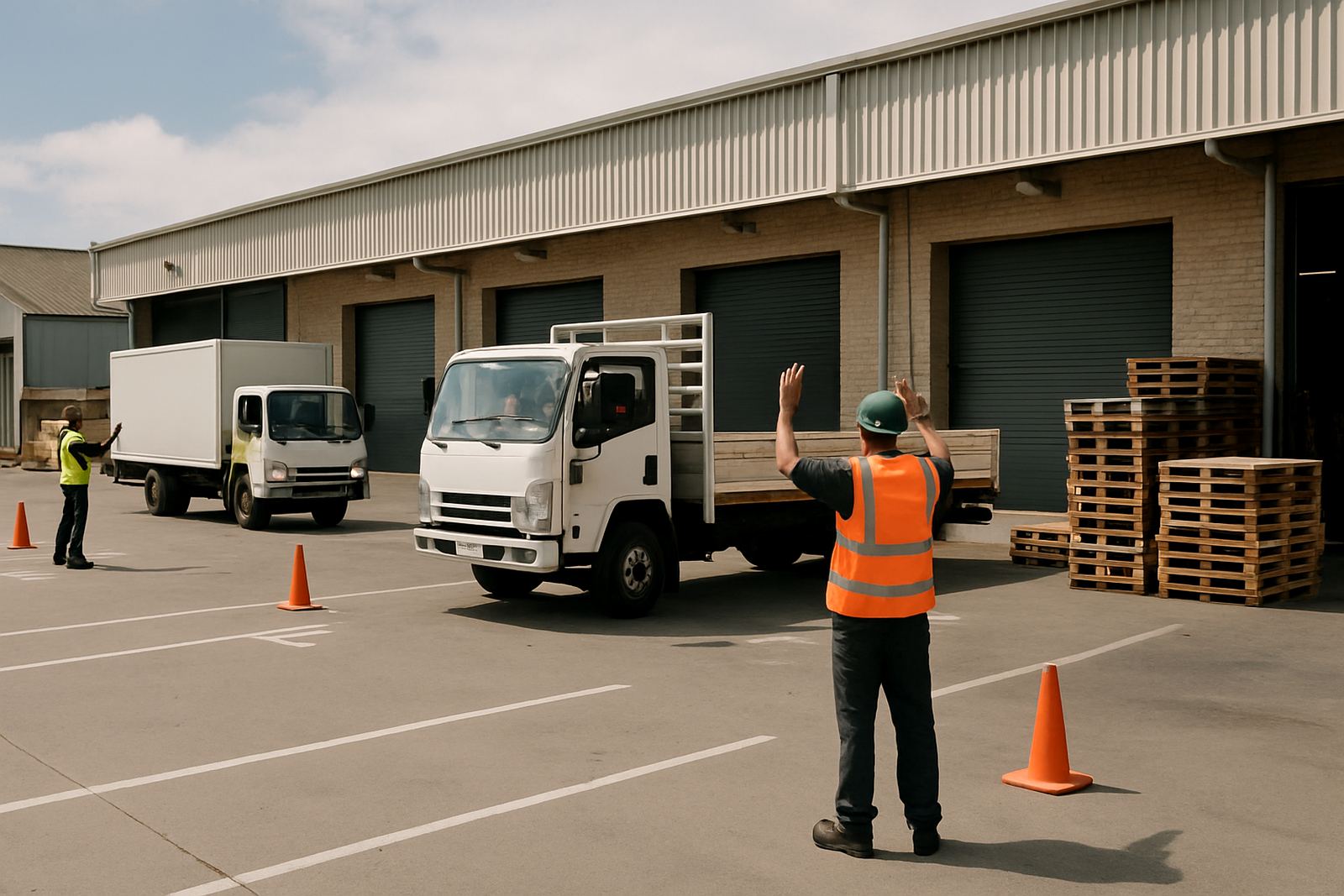
Depot Marking Brief For A Busy Goodwood Site
The client was a transport and storage depot in Goodwood, Cape Town, where loading bays, turning areas and pedestrian routes all had to work together without confusion. The brief was straightforward: improve movement, reduce near misses and make the entry points easy to read from a vehicle cab as well as on foot.
The site had constant activity through the day, with delivery trucks, forklifts, staff vehicles and contractors sharing the same yard. There was also a need to keep the marking neat and compliant with site rules, because the depot handled regular public-facing collections. We planned the job around those realities rather than trying to force a one-size-fits-all sign package onto it.
Goodwood can be rough on surface markings, especially where tyres turn sharply and dust builds up. Add summer heat and winter rain and the materials need to stay readable. We also had to work around operational hours so the depot could remain open with minimal disruption.
What We Supplied For The Traffic And Loading Areas
We produced a practical mix of depot signs and surface marking elements for the yard, gate area and loading zones. The package was built to guide movement from the entrance right through to the bays and to support safe stacking and no-parking control in the right places.
- Entrance and direction signs for vehicle flow
- Loading bay identification panels
- Stop, no entry and pedestrian warning signs
- Yard control labels for restricted areas
- Hard-wearing floor and wall marking items
- Custom cut-to-size plastic parts for fixing and edge finishing
Where the depot needed nameplates and fixed markers, we used durable plastic sheet with clean cut edges and clear lettering. The parts were cut in-house and prepared for quick installation, which helped keep the project moving on schedule. For outdoor exposure, we chose materials suitable for Cape Town conditions, including bright sun, windblown dust and moisture after rain.
Engineering Detail That Makes Depot Signs Last
Depots are hard on signage because everything gets touched, bumped, washed down or covered in grime. For this reason we treated the marking job as both a signage project and a workshop job. The panels needed accurate sizing, neat fixing holes and good resistance to wear. Our engineering workshop handled the routing and trimming, while our signage team handled layout, text sizing and installation planning.
We used a combination of rigid plastic and printed graphic faces for the signs, with sizes selected for viewing distances across the yard. Main direction panels were made larger for visibility from truck height, while smaller warning and identification signs were placed at eye level. Lettering was kept bold and uncluttered so drivers could read it quickly during loading.
Because this was a working depot, we avoided anything fussy or fragile. The aim was to keep the markings useful over time, not just on the day of handover. That meant proper edge finishing, reliable mounting and clear separation between traffic routes and foot paths.
- Material thickness selected for outdoor use and impact resistance
- Readable text sized for vehicle approach distances
- Mounting prepared for concrete, metal and wall surfaces
- Layout adapted for dusty, high-traffic conditions
Installation In A Live Depot Environment
Installation was done in a live operating yard, so we planned the sequence carefully with the depot team. The work took place over two weeks from sign finalisation to completion, with the first week focused on measuring, production and fit checks, and the second week on fixing, alignment and final handover.
We worked around loading windows to avoid blocking access roads. That included early starts for certain areas and short, controlled working periods where forklifts and trucks needed to pass. Our team was careful with positioning, because one badly placed sign can create confusion instead of solving it.
At the handover stage, we checked visibility from the gate, from the driver approach lane and from the main loading point. Small adjustments were made on site so the final setup matched the way vehicles actually moved through the depot. That kind of practical adjustment matters more than drawings alone.
Results Across The Yard And Loading Bays
Once the Goodwood depot marking was in place, the site had a clearer traffic pattern and fewer grey areas around parking and loading. Drivers could see where to stop, where to turn and which areas were reserved for pedestrians or restricted use. That made the yard easier to manage for the client team on busy days.
The finished signs also gave the depot a tidier, more organised look without adding clutter. The client wanted function first, and that is exactly how the project was delivered. The markings support daily operations, but they also help when auditors, contractors or first-time visitors come onto site and need to understand the layout quickly.
- Clearer vehicle movement through the entrance and loading area
- Better separation between pedestrian and truck routes
- Improved visibility of control points and restricted zones
- Cleaner presentation for visitors and service providers
The setup has been chosen to cope with regular washing and normal depot wear, so it should hold up well with routine upkeep. If any panel gets damaged, our team can remake matching parts and keep the site consistent.
What We Would Apply On A Similar Signage Project
For another depot marking job in Goodwood or anywhere in Cape Town, we would use the same approach: measure the site properly, plan the traffic flow first and only then decide on the sign sizes and fixing points. That order saves time and avoids signs being placed where they are hard to see or awkward to maintain.
We would also keep the material choice practical. In an industrial yard, a sign has to survive movement, weather and cleaning, not just look neat on day one. If the site has strong sun, exposed wind or heavy tyre traffic, it is worth upgrading the fixing method and choosing materials that can take the abuse.
For depots, factories and logistics yards, the best result comes from combining sign manufacture with workshop accuracy. That is where our Table View team works well, from Johan Petrus van der Merwe and Amogelang Sebola through to Willem Smit, Leanne Jacobs, Musa Dlamini and Zelda Kruger. The job gets handled properly from first measurement to final fit.
Key facts
| Project | Goodwood Depot Marking |
|---|---|
| Location | Goodwood, Cape Town |
| Client type | Transport and storage depot |
| Timeline | 2 weeks from production start to final installation |
| Main work | Traffic signage, loading area marking and depot control signs |
| Materials | Rigid plastic panels, printed graphic faces and cut-to-size mounting parts |